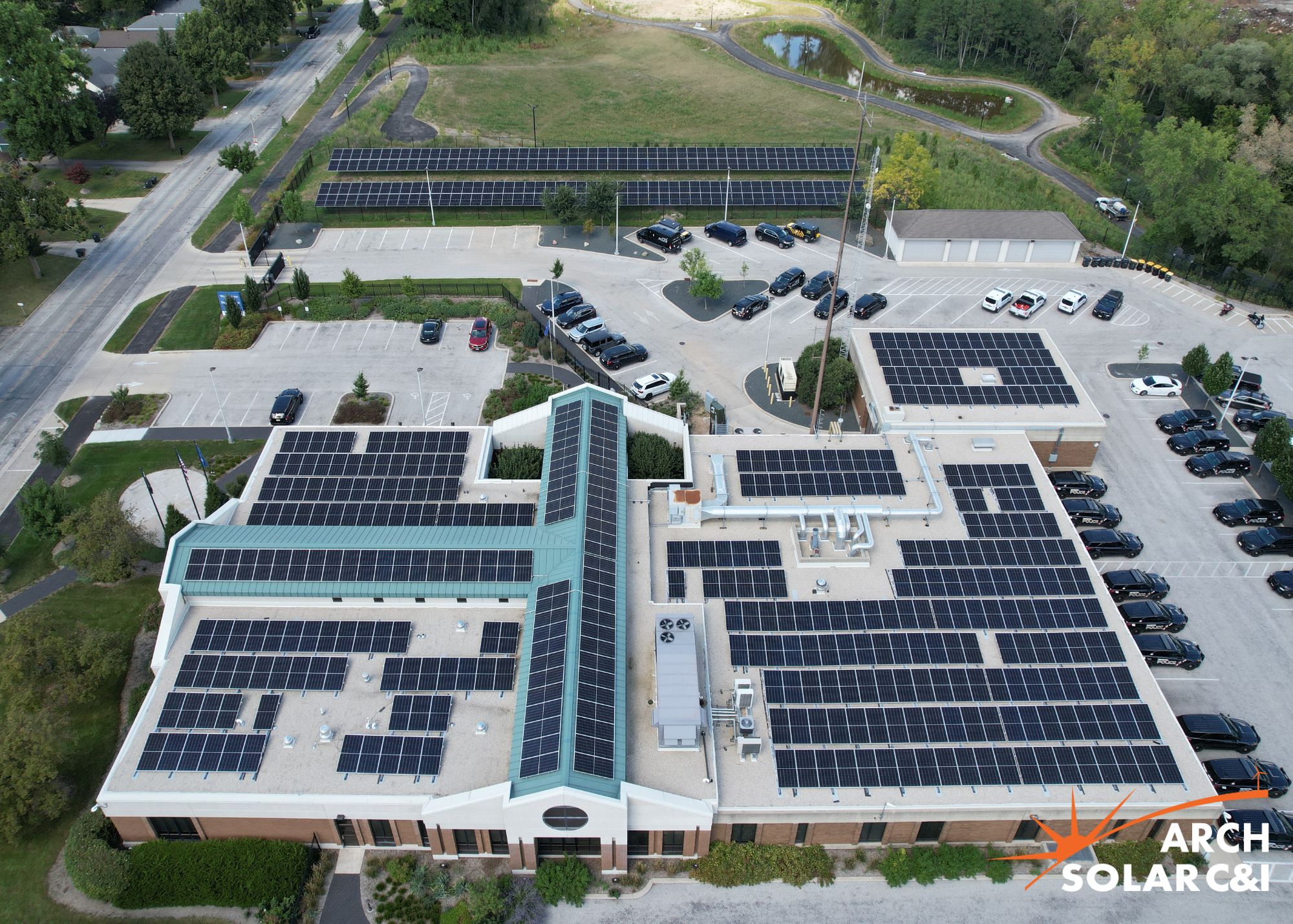
Mary Piontkowski, PE, SE—Vice President and Director of Structural Engineering—and Tom Petersen, PE—Vice President and Director of Electrical Engineering—recently presented at the AIA Wisconsin Conference, sharing practical insights on how solar power can be thoughtfully and effectively integrated into today’s buildings. Their session focused on real-world approaches to solar design that balance performance, constructability, and code compliance.
The presentation covered solar power fundamentals, along with key structural and electrical considerations for integrating photovoltaic systems. Topics included evaluating existing roof structures for retrofit projects—such as load capacity and snow drift—as well as practical strategies for designing new buildings that can seamlessly support future solar installations. Throughout the session, the focus remained on coordinated, forward-thinking design decisions that support long-term flexibility.
Solar as a Practical Path to Energy Code Compliance
One key takeaway was how solar can serve as an efficient and economical way to meet the IECC’s C406 Additional Energy Credits. In many cases, relatively modest solar installations can satisfy code requirements without introducing significant design complexity, making solar a practical option for both new construction and renovation projects.
Solar’s Rapid Growth in Wisconsin
The session also highlighted how quickly the solar industry has evolved over the past 15 years. Declining costs, improved technology, and new product offerings have driven widespread adoption. In Wisconsin, solar’s growth has been particularly striking—today, it generates roughly twice as much energy as wind statewide.
Why Rooftop Solar Often Makes Sense
Rooftop solar remains the most common approach because it leverages existing space and typically requires minimal structural modification. Many older buildings are strong candidates, as they were designed for higher historic snow loads and often have latent structural capacity.
However, rooftop solar requires careful coordination. Considerations such as snow drift, rooftop equipment, access paths, and shading must all be addressed early in the design process. Roof area is also limited, and in many cases, rooftop systems alone cannot meet a building’s full energy demand.
Looking Beyond the Roof
When rooftop space falls short, projects increasingly benefit from exploring solar opportunities beyond the roof. Ground-mounted systems, building-integrated photovoltaics, and other emerging solutions can help expand capacity while providing greater flexibility in system layout and performance.
Continuing Innovation
The presentation concluded with a look at new and emerging solar products and technologies, underscoring how innovation continues to expand what’s possible. As solar becomes easier to integrate and more adaptable to different building types, early coordination between structural, electrical, and architectural teams remains essential.
With the right planning and collaboration, solar can be a practical, code-compliant, and high-performing component of today’s building designs—now and well into the future.

Mary C. Piontkowski, PE, SE IL, principal | Vice President | Director of Structural Engineering
Mary has extensive experience in structural design across a wide range of project types and is recognized for her strong technical expertise and collaborative, solutions-oriented approach to design and construction.

THOMAS PETERSEN, PE, LEED AP, Vice President | Principal | Director of Electrical Engineering
Tom’s vast experience includes hospital power emergency systems, marinas, industrial power systems, fire alarm and paging systems, waterparks, casinos, high rises, and all forms of building and campus electrical distribution.