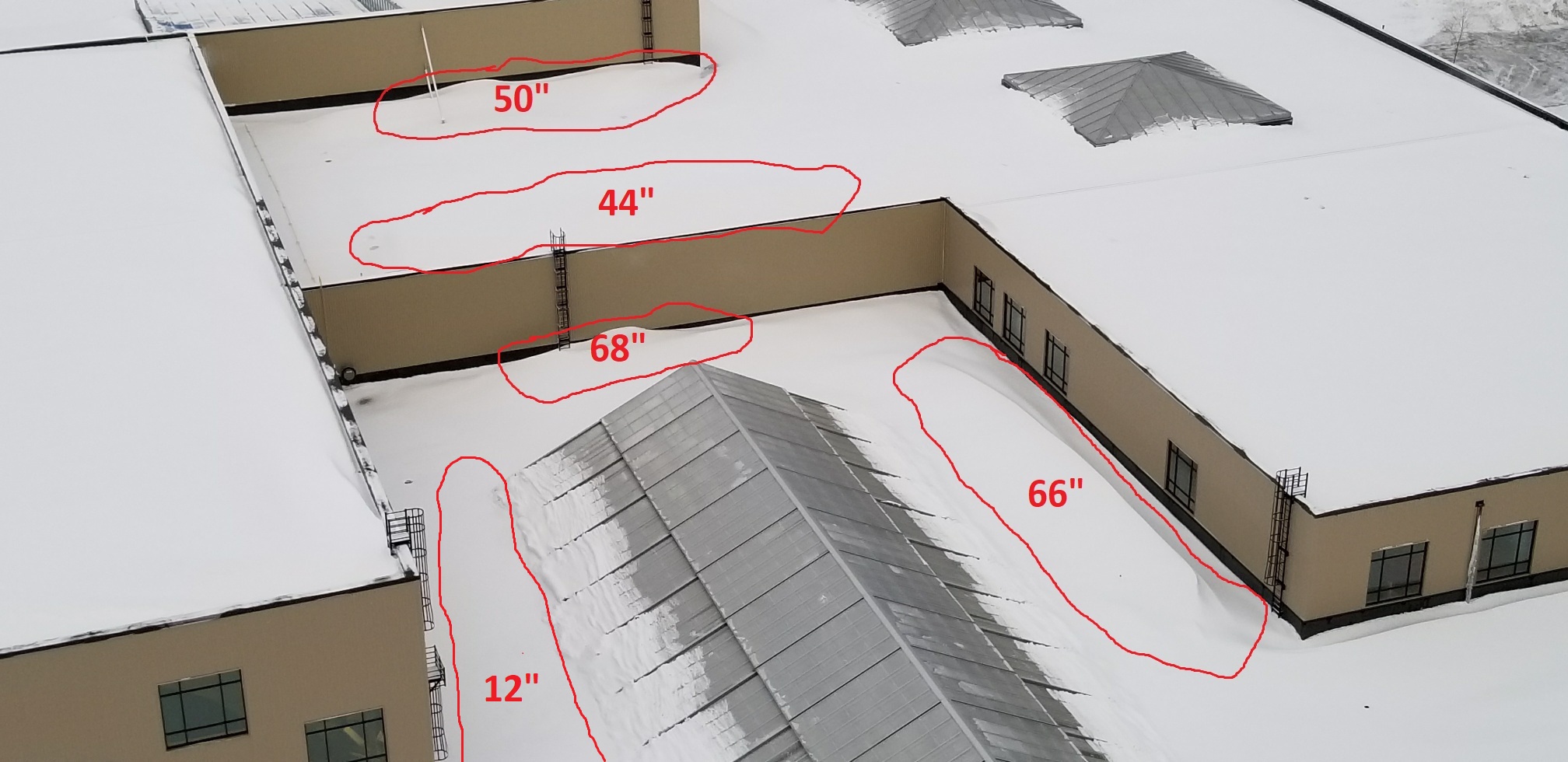
Heavy snow may not raise immediate concern when it first falls, but as storms stack up or wind pushes snow into deeper drifts, the load on a roof can increase quickly.
While building codes provide minimum design requirements, actual winter performance depends heavily on how well an Owner understands the roof, monitors changing conditions, and responds when snow begins to stress the structure. This paper offers a practical guide for Owners who want to reduce risk and protect their buildings through the winter season.
understanding roof design capacity
A good starting point is knowing how much snow the building’s roof was originally intended to support. Many Owners don’t have this information readily available, especially if the building is older or has gone through additions or renovations. Reviewing existing drawings—or having a structural engineer reassess the roof framing—can clarify the roof capacity, identify how long spans or lightweight construction affect performance, and reveal whether any roof modifications have changed how the structure carries load.
A structural engineer can also translate the design snow load into an estimated snow depth using code-based snow density values. This
gives Owners a clearer sense of what those numbers mean in practical terms. With that information, an engineer can help establish simple depth-based thresholds—essentially, at what snow depth Owners should pause, take a closer look at accumulated depth or drift areas, or bring someone in to evaluate conditions. This makes snow events easier to manage and helps Owners focus on the key moments when decisions matter most.
RECOGNIZING AREAS WHERE SNOW BUILDS UP
Snow rarely settles evenly across a roof and knowing why helps Owners recognize potential problem areas. When wind moves across a building, it loses speed as it encounters parapets, mechanical units, changes in elevation, or corners. As the wind slows, it drops the snow it’s carrying, creating drifts. Irregular roof shapes naturally interrupt airflow and cause heavier drifting. Equipment screens, penthouses, and tall rooftop units can create similar disruptions that lead to deeper snow accumulation. Because of this, certain areas routinely see more snow than others. Becoming familiar with these patterns makes it easier to focus attention on the places most likely to experience added load.
WARNING SIGNS OF OVERSTRESS
Certain changes inside or outside the building can signal that the structure is being strained. New cracks in ceilings or walls, doors or windows that begin to stick or no longer close properly, visible sagging or bowing of beams, trusses, or joists, unusual creaking or popping noises, sudden pooling of snow or water on flat roofs, or water entry from blocked drainage are all warning signs that warrant prompt evaluation. Recognizing these conditions early gives an Owner time to respond before the situation worsens. FEMA Snow Load Safety Guidance. FEMA Snow Load Safety Guidance.
PROACTIVE MAINTENANCE AND PLANNING
Owners can reduce risk through routine maintenance and preparation. Key items include keeping drains, scuppers, and gutters clear before winter, ensuring heat trace systems function where installed, and addressing areas prone to ponding. Monitoring roof conditions after significant snow events is important, and having a simple, actionable plan for response—who to call, how to safely remove snow if necessary, and when to engage an engineer—ensures consistent decision-making during high-stress events. These practical steps help prevent avoidable problems and give Owner’s confidence in their building’s performance. Read more.
ENGAGING A STRUCTURAL ENGINEER
Early involvement of a structural engineer is one of the most effective ways to manage snow load risk. A structural engineer can identify vulnerabilities, explain the practical implications of observed snow depths, and provide guidance on when corrective measures should be taken. This is especially valuable for roofs that have been modified, facilities with chronic drainage or ice dam issues, or sites that occasionally see extreme snow. By providing proactive evaluation and guidance, structural engineers help Owner’s act decisively and safely, ensuring the protection of both the building and the people inside it.
CONCLUSION
Snow loads remain manageable when Owners understand their roof, observe conditions, perform routine maintenance, and respond proactively during major storms. With clear plans and early professional guidance, Owners can reduce the likelihood of damage and extend the life of their buildings.

Mary Piontkowski PE, SE (IL), Vice President | Principal | Director of Structural Engineering
Mary is the Director of Structural Engineering at Harwood and a licensed professional engineer with extensive experience in the design and management of a wide range of building projects, from commercial and educational facilities to hospitality and government. Known for her collaborative approach and deep knowledge of building codes and design standards, Mary is dedicated to ensuring safe, efficient, and innovative structural solutions.